

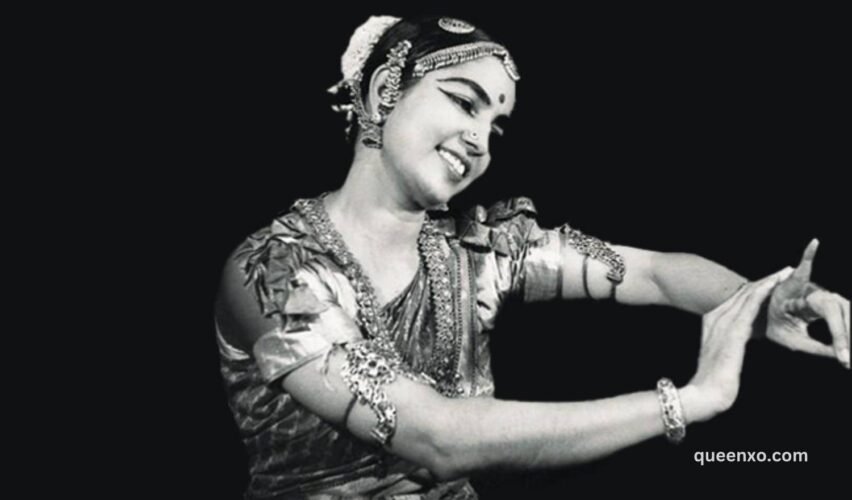
In 1935, when Rukmini Devi Arundale stepped onto a stage in Chennai to perform a dance called Sadir, she did more than present an art form—she shattered centuries of social convention . A Brahmin woman, married to an English theosophist, performing a dance associated with devadasis (temple dancers) who had been relegated to the margins of society. The conservative public was outraged. But Rukmini Devi was undeterred. Her performance that evening marked the beginning of a transformation that would rescue a dying art from stigma and reinvent it as the globally revered classical dance we now know as Bharatanatyam .
The Art That Fell From Grace
Bharatanatyam, originally known as Sadir, had ancient roots as a sacred temple dance performed by devadasis—women dedicated to temple deities who served as custodians of music and dance . For centuries, they held respected positions in temple and court life. But under British colonial rule, the system declined. Devadasis became exploited, and their art form was increasingly associated with moral degradation and vulgarity . By the early 20th century, Sadir had become “the preserve” of a stigmatized community, and women from “respectable” families were forbidden from even learning it, let alone performing it publicly .
A Defiant Beginning
Rukmini Devi was an unlikely revolutionary. Born into an upper-class Tamil Brahmin family in 1904, she was exposed early to theosophical thought and traveled widely after her marriage to George Arundale . A chance encounter with Russian ballerina Anna Pavlova on a ship to Australia sparked her interest in dance. Pavlova, seeing Rukmini’s potential, advised her to look to India’s own classical traditions .
The turning point came in 1933. E Krishna Iyer, a lawyer and freedom fighter, invited Rukmini to watch a performance by two talented devadasi dancers at the Madras Music Academy. She was mesmerized . When she expressed a desire to learn this dance, conservative society erupted in protest . But Rukmini persisted. She trained under Mylapore Gowri Amma, a renowned devadasi, and later under the great master Pandanallur Meenakshi Sundaram Pillai .
Reimagining the Art Form
Rukmini Devi’s vision went beyond learning the dance. She set out to transform it. With her husband, she founded Kalakshetra in 1936—an academy built on the ancient gurukul system where students lived and learned together . Here, she systematically reimagined Bharatanatyam:
She purged the dance of its explicit sringara (erotic) elements, investing it instead with bhakti (devotion) and spiritual depth . She introduced new costumes and jewelry inspired by temple sculptures, designed with the help of an Italian seamstress . She added musical instruments like the violin, modern stage lighting, and choreographed large-scale dance-dramas based on epics like the Ramayana .
More radically, she broke the monopoly of male nattuvanars (dance directors) by training women to take on this role—a first in Bharatanatyam history . In 1945, when a young student’s arangetram (debut performance) was conducted by Rukmini Devi herself, she declared: “I am happy that on Vijayadashami Day I am able to prove that we can do without them”—referring to the male gurus who had guarded their privilege for generations .
The Legacy Lives On
Rukmini Devi’s contributions extended far beyond dance. She was the first woman nominated to India’s Rajya Sabha (1952-1962) and was instrumental in passing the Prevention of Cruelty to Animals Act and establishing the Animal Welfare Board of India . She received the Padma Bhushan in 1956 and the Sangeet Natak Akademi Fellowship in 1967 .
Today, Kalakshetra stands as an “Institute of National Importance,” recognized by an Act of Parliament in 1993 . Thousands of young women (and men) learn Bharatanatyam without stigma, performing arangetrams that would have been unimaginable a century ago.
When Rukmini Devi once said, “Women should have a real voice in every department of the nation,” she was speaking not just of politics, but of culture, art, and the quiet power of reclaiming what was denied . Through her dance, her defiance, and her unshakeable conviction, she proved that broken rules can become the foundation for something beautiful.
FAQ:
Q: What was the devadasi system?
A: Devadasis were women dedicated to temple deities in South India who served as dancers, musicians, and custodians of classical arts. While initially respected, the system declined under colonial rule, leading to exploitation and social stigma .
Q: Why was Rukmini Devi’s performance controversial?
A: As a Brahmin woman from an upper-class “respectable” family, her decision to learn and publicly perform Sadir—a dance associated with devadasis—defied rigid social conventions. Conservative society viewed the art form as vulgar and unsuitable for women of her background .
Q: What changes did she make to Bharatanatyam?
A: She removed explicit erotic elements, introduced new costumes and jewelry, added the violin and modern lighting, choreographed dance-dramas, and broke the male monopoly on teaching and directing dance .
Q: Does Kalakshetra still exist?A: Yes. Kalakshetra is now a deemed university and “Institute of National Importance” in Chennai, continuing to teach Bharatanatyam, music, and traditional arts .