

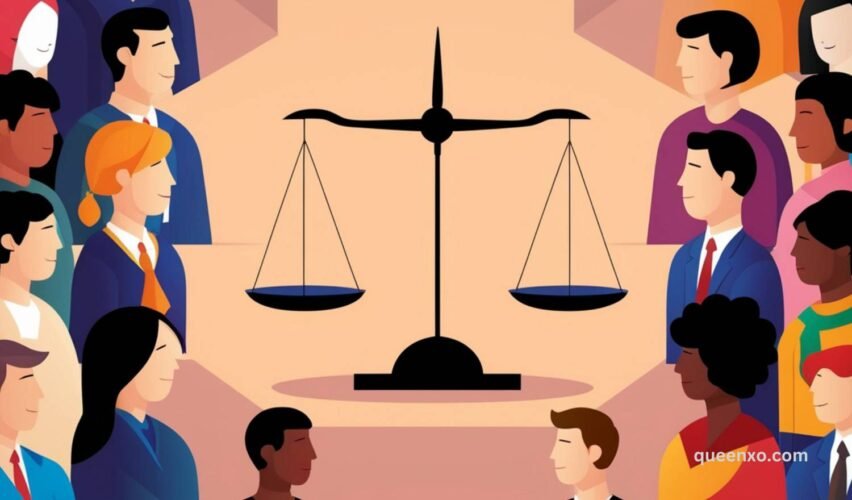
There is a quiet test that reveals the character of a man. It is not about how he treats those with power over him, nor how he performs in moments of triumph. The test is simpler and more revealing: how does he respond when women ask for equality?
In boardrooms and living rooms, on social media and in casual conversation, the question of gender equality still provokes defensiveness, resentment, and fear. But men of quality—the kind worth building lives, families, and societies with—do not react this way. They do not see equality as a threat. They see it as what it is: a foundation for stronger partnerships, healthier communities, and a more just world.
Why Equality Threatens Some Men
The fear of equality is not irrational—it is logical, if your starting assumption is that life is a zero-sum game. For men raised on the unspoken promise of automatic authority, the idea of sharing power can feel like losing something. When the default setting is dominance, equality feels like deprivation.
This fear manifests in familiar ways:
Defensiveness when women’s issues are raised (“Not all men”)
Resentment toward policies that address historical imbalance (“What about men?”)
Anxiety about changing gender roles that no longer guarantee male primacy
Dismissal of feminist concerns as unnecessary or exaggerated
These reactions are not signs of strength. They are symptoms of a fragility built on the assumption that one’s worth depends on being “above” someone else.
What Quality Looks Like
Men of quality operate from a different premise. They understand that equality is not subtraction but addition. They know that when women have equal opportunity, equal pay, and equal voice, the result is not less for men—it is more for everyone.
Men of quality are secure. They do not need to be the loudest voice in the room to know their value. They welcome capable women as colleagues, partners, and leaders because they know that competence is not a threat—it is an asset.
Men of quality share power. They do not cling to outdated hierarchies that place them at the top by default. They mentor women, advocate for them, and step back when it is time for others to lead. They know that true leadership is not about holding power over others, but about empowering those around them.
Men of quality do the work. They do not wait for women to educate them about sexism. They read, listen, and reflect on their own biases. They notice when they are dominating conversations, interrupting, or taking credit for shared work—and they adjust.
Men of quality share the load. They do not “help” with domestic work as if it is a favor; they participate fully because they live there too. They understand that the mental load—remembering appointments, managing schedules, organizing family life—is not “women’s work” to be assisted with, but shared responsibility to be owned.
Men of quality are not threatened by strong women. They admire them, learn from them, and stand beside them. They know that a woman’s success does not diminish their own. There is no quota on human potential.
What Equality Actually Looks Like
The world men of quality are building is not one where men lose. It is one where:
Fathers take parental leave without career penalty and know their children deeply
Men are not the sole providers unless they choose to be, freed from the crushing pressure of being the only source of family income
Boys grow up seeing women as leaders, knowing their own worth does not depend on being “above” anyone
Men can be vulnerable, ask for help, and express emotions without being told they are weak
Relationships are partnerships of mutual respect, not power struggles
Men are judged by their character, not their ability to dominate
This is not a dystopia. It is liberation for men too.
The Cost of Fear
Men who fear equality pay a price. They miss out on the richness of genuine partnership, settling instead for relationships built on control rather than connection. They limit their own growth by surrounding themselves only with those they can feel superior to. They pass on to their sons the same fragile insecurity they inherited, perpetuating a cycle that harms everyone.
The man who fears a woman’s voice fears his own irrelevance. The man who welcomes it knows his value is not in being the only voice, but in being part of a chorus.
The Bottom Line
History will not remember the men who clung to dominance out of fear. It will remember the men who had the courage to let go—who saw that equality was not a loss to be resisted but a freedom to be embraced.
Men of quality do not fear equality. They demand it. Not as a concession to women, but as a foundation for a world where everyone can thrive. They know that the measure of a man is not how high he stands above others, but how willingly he stands beside them.
The question is not whether equality is coming. It is whether men will meet it with fear or with the courage to become the partners, fathers, and leaders the moment demands. The men of quality have already chosen.
FAQ:
Q: Doesn’t feminism sometimes go too far and become anti-men?
A: Feminism, at its core, is the belief in social, economic, and political equality of the sexes. Extremist voices exist on every fringe, but they do not define the movement. Focusing on these outliers often serves as a distraction from the substantive work of building equality. Men of quality engage with the substance, not the straw men.
Q: What about men’s issues? Don’t they matter too?
A: Yes. Men face genuine challenges—higher suicide rates, workplace fatalities, loneliness, rigid gender expectations. Addressing these is not in opposition to feminism; it is part of the same project. Rigid gender roles harm everyone. Men of quality recognize that dismantling patriarchy helps men as much as women.
Q: How can I be a better ally without being performative?
A: Do the quiet work. Listen more than you speak. Notice when women are interrupted and redirect attention. Share credit generously. Take on your share of domestic and emotional labor. Mentor women without expecting recognition. Speak up when you witness sexism, even when no women are present. Allyship is not a label; it is a consistent action.
Q: What if I feel defensive when these topics come up?A: Defensiveness is a common first reaction—it does not make you a bad person. What matters is what you do with it. Sit with discomfort. Ask yourself why equality feels threatening. Listen to the experiences of women without needing to defend or explain. Growth is uncomfortable; that discomfort is not a sign you are wrong, but that you are learning.