


Scroll through social media, and you’ll encounter the phrase everywhere: “main character energy.” It accompanies videos of solo coffee dates, airport arrivals, and moments of unapologetic self-prioritization. The concept—living as if you are the protagonist of your own life—has become a cultural touchstone, particularly among young women. But beneath the empowering veneer lies a more complex question: is this a genuine expression of hard-won confidence, or a coping mechanism for deeper disconnection?
The Appeal: Why “Main Character” Resonates
The rise of main character energy didn’t emerge in a vacuum. It arrived as a direct response to several cultural realities:
The Exhaustion of People-Pleasing: For generations, women have been socialized to be supporting characters in others’ stories—caretakers, emotional managers, and selfless nurturers. The main character framework offers permission to prioritize one’s own needs and desires without apology.
The Loneliness Epidemic: With traditional community structures eroding and rates of social isolation climbing, framing solitude as intentional and cinematic transforms what might feel like loneliness into something that feels chosen and empowering.
The Social Media Performance: Platforms like TikTok reward curated self-narratives. The “main character” aesthetic is highly visual, easily packaged, and algorithmically favored—making it both accessible and reinforcing.
Reclaiming Agency: For those who have experienced marginalization, trauma, or invisibility, adopting a main character mindset can be a powerful act of reclaiming one’s own narrative and existence.
The Other Side: When Empowerment Masks Something Deeper
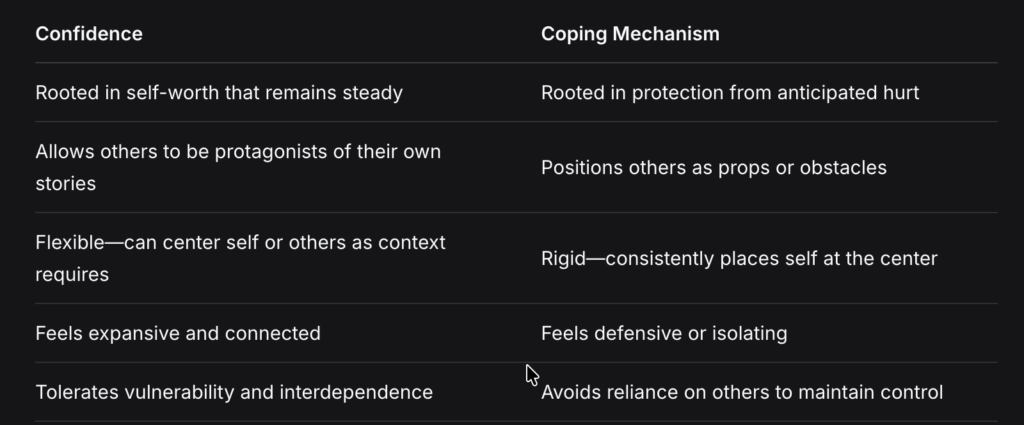
But mental health professionals and cultural critics have begun noting a shadow side to the trend. What looks like confidence can sometimes function as a coping mechanism for:
Avoidant Attachment: Casting everyone else as “side characters” can serve to keep genuine intimacy at a distance. When others are framed as supporting cast, they become easier to dismiss or leave behind without emotional consequence.
Unprocessed Loneliness: The aestheticization of being alone does not always equate to comfort with solitude. For some, the “solo main character” content masks profound isolation that goes unaddressed.
Narcissistic Tendencies: At its extreme, main character energy can bleed into a worldview where others exist only in relation to one’s own story—a framework that, if rigidly maintained, mirrors narcissistic patterns.
Burnout and Disillusionment: For many, the turn inward comes after pouring oneself into relationships, jobs, or caregiving without reciprocity. The “main character” shift can signal a protective withdrawal rather than genuine self-actualization.
A Balanced Approach: Being the Author, Not Just the Main Character
Perhaps the most useful reframing is moving from “main character” to “author.” An author can choose when to center a character and when to let others take narrative space. Authors understand that the most compelling stories are not solos but ensembles—relationships and communities where supporting characters have depth, agency, and importance.
Healthy self-focus includes:
Setting boundaries without building walls
Prioritizing your needs while remaining available to others
Enjoying your own company without needing to aestheticize it
Knowing when the spotlight belongs on someone else
The Bottom Line
Main character energy, in moderation, can be a healing antidote to a lifetime of self-erasure. It can help women unlearn the harmful habit of shrinking themselves to fit the expectations of others. But like any framework, it becomes limiting when applied rigidly.
The goal is not to be the main character at all times—it’s to know that you are *a* main character in your own life, without needing everyone else to be reduced to extras in your story. True confidence holds space for both self and others. It trusts that your worth remains whether you are center stage or stepping back to let someone else shine.
The most empowering narrative is not one where you are always the focus, but one where you are always the author—writing a life that balances self-respect with genuine connection, knowing when to lead and when to be part of something larger than yourself.
FAQ:
Q: Is it unhealthy to want to be the “main character” of my own life?
A: Not at all. Recognizing your own agency and prioritizing your well-being is essential. The concern arises only when this mindset prevents genuine connection or frames others as less important than your own story.
Q: How can I tell if I’m using main character energy as a coping mechanism?
A: Reflect on whether your self-focus feels expansive or defensive. Do you feel energized and connected, or protected and distant? Notice if you consistently struggle to make space for others’ needs or perspectives.
Q: Can main character energy be helpful for people who have experienced trauma?
A: Yes, for many it can be an important part of reclaiming agency after experiences where they felt powerless. However, therapy or professional support can help ensure this framework supports healing rather than masking deeper wounds.
Q: How do I balance prioritizing myself with being there for others?
A: Healthy relationships are reciprocal. Set boundaries that protect your energy, but remain open to giving and receiving support. The goal is interdependence—being able to lean on others and be leaned on in return.