

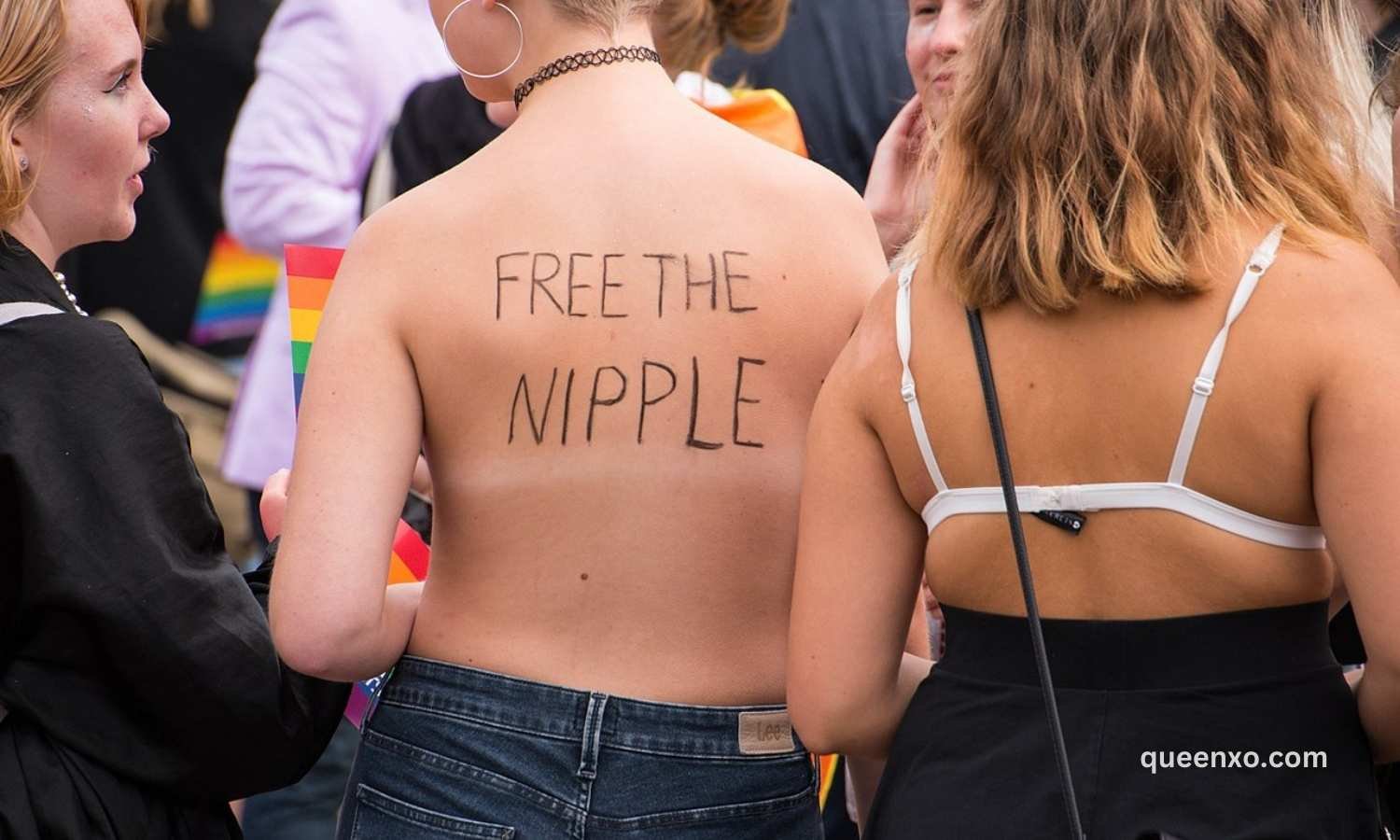
The phrase “Free the Nipple” has moved from a provocative social media hashtag to a mainstream flashpoint, symbolizing a much deeper and more complex debate. It stretches far beyond swimwear or social media censorship to touch on fundamental questions about autonomy, equality, and public responsibility. This conversation about women’s bodies in public space remains profoundly unfinished, caught between evolving ideals of freedom and enduring social norms.
The Movement’s Origins: From Activism to Global Hashtag
While the debate feels contemporary, public challenges to female topless bans have roots in feminist activism of the 1960s and 70s. The modern “Free the Nipple” campaign, however, gained its name and widespread visibility from a 2012 American documentary film of the same title, directed by Lina Esco.

The film followed activists challenging laws that criminalized female toplessness, arguing they were unconstitutional and perpetuated gender inequality. The movement gained critical momentum in 2014, propelled by celebrity endorsements and a strategic, viral social media campaign where women posted photos with covered or pixelated nipples to protest the inconsistent censorship of female versus male bodies on platforms like Instagram. This digital activism brought a legal and feminist issue into the daily discourse of millions, framing it as a question of digital rights and bodily autonomy.
On one side of the ongoing discussion rests a powerful argument about equality and bodily autonomy. Proponents highlight a stark legal and social double standard: while men’s chests are largely uncontroversial, women’s are heavily sexualized and regulated. This disparity, they argue, reinforces the notion that women’s bodies are inherently public property, subject to scrutiny and control. The movement frames itself as a challenge to this ingrained sexualization, seeking to destigmatize the female form and assert a person’s right to choose without shame or legal penalty. It is positioned as a matter of consent and personal freedom—the right to decide how one’s body exists in public.
Conversely, the debate intersects with deeply held and diverse views on public decency, social cohesion, and cultural context. Critics and concerned citizens often frame the issue not as one of equality, but of appropriate communal standards. They question where the line should be drawn between individual liberty and collective comfort, pointing to long-established social contracts about public dress. Some raise concerns about unintended consequences, such as the potential for increased objectification or the challenges it may pose in certain community and professional settings. This perspective often centers on a philosophy of public responsibility and the preservation of what are viewed as shared cultural norms.

The legal landscape reflects this tension. Jurisdictions vary widely, with some locales embracing greater gender equality in public attire laws and others maintaining strict distinctions. Each court case or legislative change becomes a battleground for these competing values.
Ultimately, the “Free the Nipple” debate acts as a modern litmus test for societal values. It forces a confrontation between the principles of individual liberty and the persistence of traditional public norms. It asks whether true equality requires uniformity in treatment, and where the boundaries of personal freedom in a shared society lie. The conversation, having evolved from street protests to digital campaigns, is not merely about anatomy; it is about how we negotiate freedom, responsibility, and respect in an increasingly diverse and digitally connected public square. Its resolution, if one is ever reached, will reveal much about our evolving social contract.